
A booking and professional profile app for hair braiders, who today run their work through WhatsApp. Designed with braiders and open to the public since September 2026.
Braiders are self-employed and run everything through WhatsApp, Pix (Brazil's instant payments), and Instagram, with no tools built for their niche.
A booking app that connects braiders and clients, designed with braiders and tested every round.
Launched in January 2026 to a group of users. Open to the public since September.
GoBraids started with a simple question: why do hair braiders, highly skilled professionals, still run everything through WhatsApp?
I joined as co-founder and Product Designer. There are three of us, and I'm responsible for product and digital marketing. We built the MVP with a team of about ten designers and developers. When I joined, there were already wireframes for a first version. They worked, but had problems with hierarchy, with use on weak connections, and with fit to the users' culture.
The pain wasn't a lack of talent. It was a lack of structure.
I started from the assumption that the problem was only visibility. Immersion showed something bigger: technology barriers, forced informality, an undervalued craft, and no tools that respect braiders' identity and autonomy.
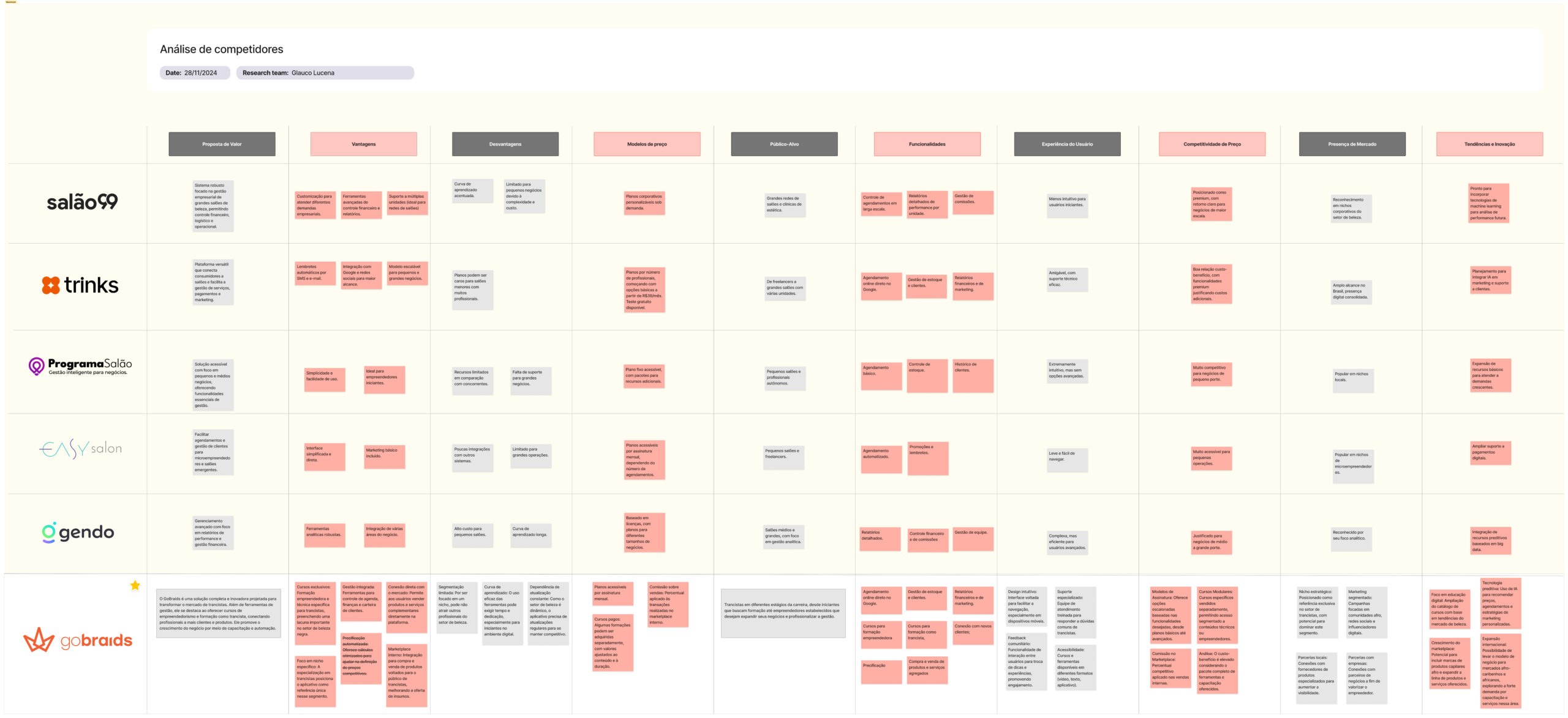
In the benchmark (Salão99, Trinks, Programa Salão, EasySalon, and Gendo), every product focused on salons and general services, with fixed or commission-based pricing. None served this niche specifically or with cultural sensitivity. That gap became the product's positioning.

In one test cycle, users made it clear that the booking flow the team found elegant created friction where there shouldn't be any. We threw out three weeks of work.
Defending a solution with data is easy. The hard part is explaining why you drop one that looked good.
With the other two co-founders, I organized the sitemap and separated the client and braider journeys. I prioritized short paths for phone use on unstable connections, and a braider flow that lets them manage schedule, portfolio, and clients without technical knowledge.


The style guide starts from the brand: colors inspired by the flags of African countries (Nigeria, Ethiopia, Ghana, and Senegal), reworked in pastel and earthy tones, with enough contrast for reading. Components follow a modular base inspired by Tailwind, designed mobile-first.
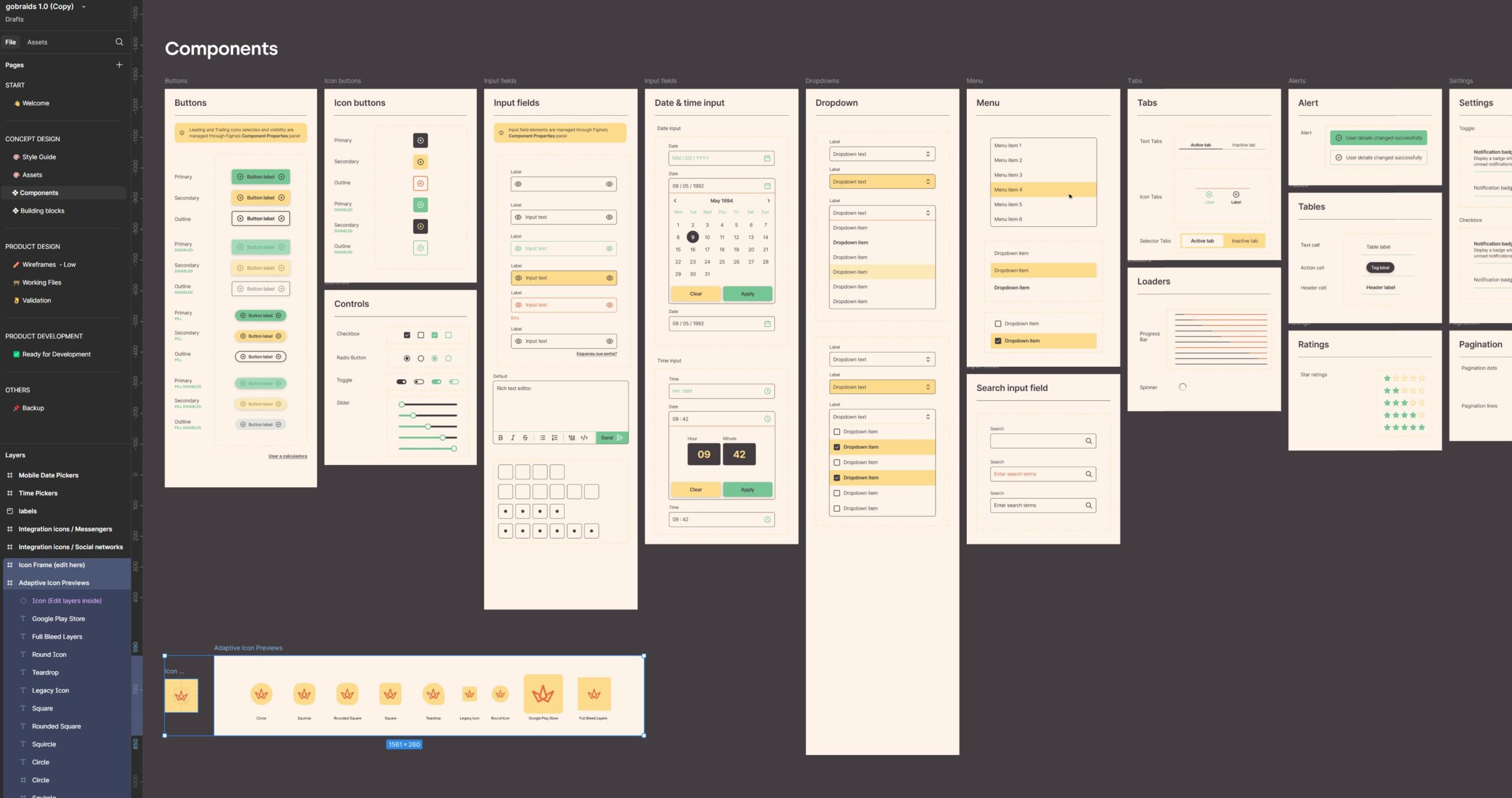

The high-fidelity prototype covers the interface's real states: empty and filled profiles; pending, accepted, and declined bookings; post-service reviews; loading and error. We used it to test with users, align the team, and present to stakeholders.


We launched in January 2026 to a group of users. In September, the app opened to the public.
Next steps: braider search, financial management, a marketplace for Afro beauty products, online payments, and reviews, with ongoing tests with groups of users.
In an early-stage company, the designer who only delivers screens is the first to lose touch with the product.
You need to understand the business to make UX decisions, and understand UX to question business decisions.